Monday, June 01

Passion Java Says He Is Inspired By Pokello & Didn’t Insult Her With H Word

The Gaffa Prophet Passion Java is setting the record straight with the Pokello incident. Reports were that Pokello did not want Passion Java at Ginimbi's funeral and was caught on camera trash talking the man of God. Passion Java posted a day letter a message many believe was aimed at Pokello.. Passion Java just posted the following message about his respect for Pokello .

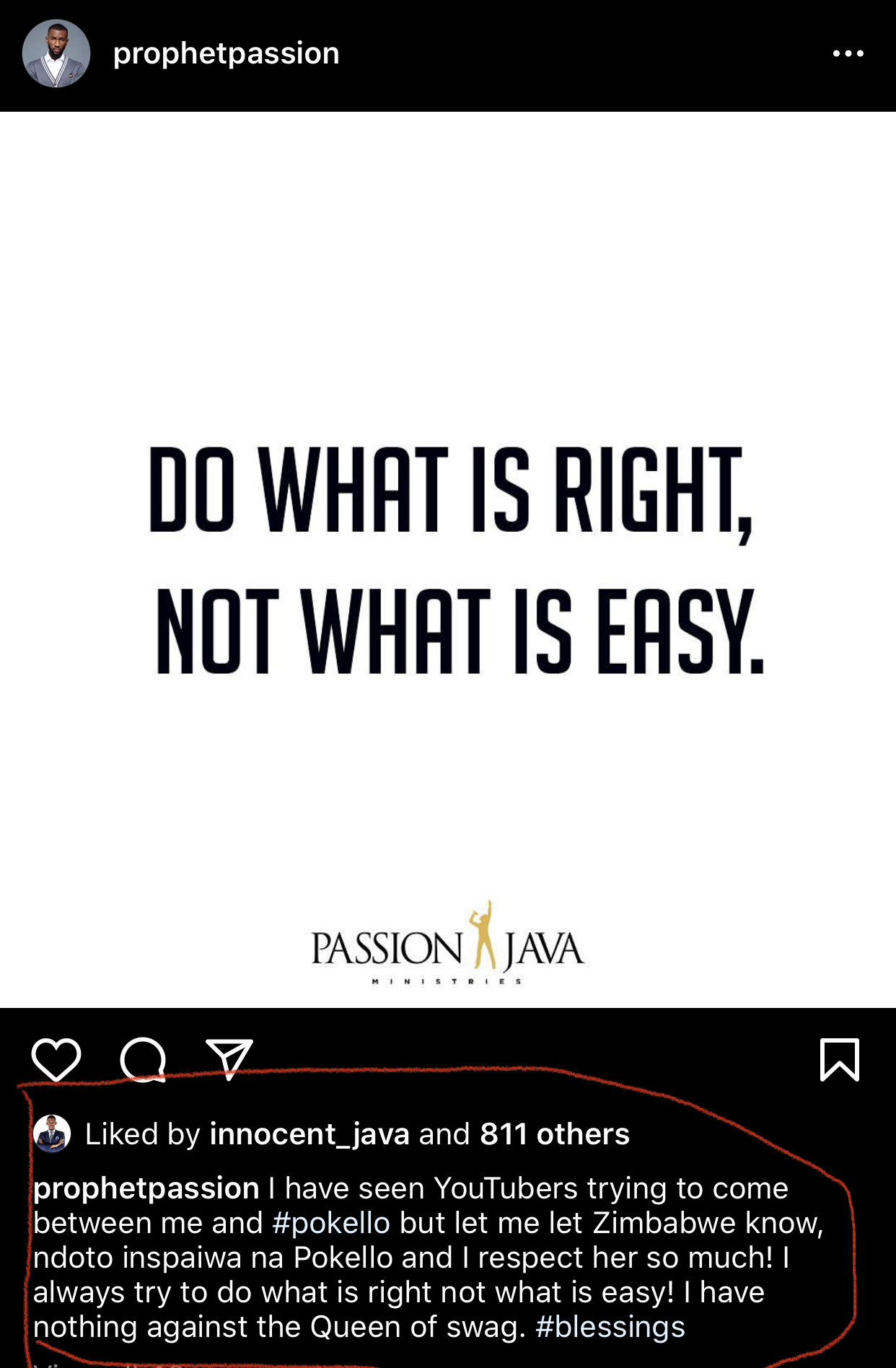
I have seen YouTubers trying to come between me and #pokello but let me let Zimbabwe know, ndoto inspaiwa na Pokello and I respect her so much! I always try to do what is right not what is easy! I have nothing against the Queen of swag. #blessings

The post which had everyone talking that the man of God had Clapbacked at Pokello is below 

A village boy who grew up watching Falcon Crest and Dynasty. Your hunger was a different kind of hunger. You defied all odds. Without Education, without ‘textbook’ looks, without a handout. Started selling phones in town, soon met a man who traded in Gas and saw an opportunity. It’s from being his middleman that you learnt the ropes of the Trade to become the King of the South. 

I think about your life from when we became friends 15 years ago. What did you not achieve? By age 22, you owned a Range Rover and rented a 4 bedroom house in Greystone Park. By 25, you had bought a house in
View all 1,256 comments

When I see you again.
I would tell you that I cried for 24 hrs till my heart bled out. I know you would laugh and say ‘Poki haupenge here?’
I would tell you, you hit Rockstar status and trended World-wide. 
I would tell you, your fame Skyrocketed in a matter of hours.
All across the world it was ‘Ginimbi’. You loved the limelight and it reciprocated.

  • Share:

Info News

Best Weight Loss Programs That Actually Work: A Complete Guide to Safe, Sustainable Results

Best Weight Loss Programs That Actually Work

rnrn

Losing weight is not just about eating less for a few weeks. The real goal is building a system you can actually live with.

rnrn

That is where a good weight loss program becomes valuable. The best weight loss programs do more than hand you a meal chart. They help you understand your eating habits, improve your activity level, manage cravings, track progress, and build long-term discipline.

rnrn

A successful program should not feel like punishment. It should feel structured, realistic, and flexible enough to fit your life.

rnrn

What Makes a Weight Loss Program Effective?

rnrn

A strong weight loss program usually includes four major parts: nutrition, movement, behavior change, and accountability.

rnrn

The CDC explains that healthy weight loss includes healthy eating patterns, regular physical activity, sleep, and stress management. That means a program focused only on cutting calories may not be enough. Your body, schedule, emotions, and environment all matter.

rnrn

A good weight loss program should help you answer these questions:

rnrn

What should I eat?

rnrn

How much should I eat?

rnrn

How do I stay consistent?

rnrn

What should I do when progress slows down?

rnrn

How do I avoid gaining the weight back?

rnrn

If a plan cannot answer those questions, it may not be complete.

rnrn

Types of Weight Loss Programs

rnrn

1. Lifestyle-Based Weight Loss Programs

rnrn

Lifestyle programs focus on healthy eating, daily movement, sleep improvement, stress control, and habit building.

rnrn

These are often the best place to start because they teach long-term skills. Instead of depending on extreme dieting, you learn how to make better choices every day.

rnrn

A lifestyle program may include:

rnrn

Meal planning
rnPortion control
rnWalking or strength training goals
rnWeekly weigh-ins
rnFood tracking
rnCoaching or group support
rnSleep and stress guidance

rnrn

This type of program is ideal for people who want slow, steady, realistic progress.

rnrn

2. Medical Weight Loss Programs

rnrn

Medical weight loss programs are supervised by doctors, nurse practitioners, dietitians, or other licensed professionals.

rnrn

These programs may include lab work, body composition tracking, health screenings, prescription options, and ongoing clinical support.

rnrn

The NIH notes that treatment for overweight and obesity can include lifestyle changes, support from specialists, medicines, and other medical tools when appropriate.

rnrn

Medical weight loss may be a good option for people who:

rnrn

Have obesity-related health concerns
rnHave tried dieting many times without lasting success
rnNeed professional monitoring
rnAre considering prescription weight loss medication
rnHave conditions such as high blood pressure, insulin resistance, or sleep apnea

rnrn

A medical program should always be supervised by qualified health professionals.

rnrn

3. Online Weight Loss Programs

rnrn

Online weight loss programs are popular because they are convenient. You can track food, meet with coaches, follow workouts, and receive meal plans from home.

rnrn

A good online program should include:

rnrn

Easy meal tracking
rnProgress reports
rnCoaching access
rnEducational content
rnExercise guidance
rnSupport community
rnRealistic goals

rnrn

Online weight loss programs are especially useful for busy people who cannot attend in-person appointments.

rnrn

4. Meal Plan-Based Programs

rnrn

Some people do better when they do not have to guess what to eat. Meal plan-based programs provide menus, grocery lists, recipes, or prepared meals.

rnrn

The advantage is simplicity. You know what to buy, what to cook, and how much to eat.

rnrn

However, the best meal plans should still teach you how to make your own choices. If you only lose weight while following a strict menu, you may struggle once the plan ends.

rnrn

5. Fitness-Focused Weight Loss Programs

rnrn

Exercise matters, but it works best when combined with nutrition. The CDC says adults need at least 150 minutes of moderate-intensity aerobic activity each week, plus muscle-strengthening activity at least 2 days per week.

rnrn

A fitness-focused program may include:

rnrn

Walking plans
rnStrength training
rnCardio workouts
rnMobility training
rnGroup classes
rnPersonal training
rnProgress tracking

rnrn

The best workout is the one you can repeat consistently.

rnrn

What to Look for Before Choosing a Program

rnrn

Before paying for any weight loss program, look for these signs:

rnrn

Realistic Promises

rnrn

Be careful with programs that promise huge weight loss in a very short time. Fast results may sound exciting, but extreme methods are often hard to maintain.

rnrn

A strong program focuses on steady progress and long-term health.

rnrn

Professional Guidance

rnrn

A program does not always need to be medical, but it should be based on sound health principles. For people with medical conditions, professional supervision is important.

rnrn

Flexible Food Choices

rnrn

Avoid plans that label too many foods as “bad.” A good program helps you build balance instead of fear.

rnrn

Accountability

rnrn

Most people do better when they have support. This can come from a coach, app, group, doctor, or weekly check-in.

rnrn

Maintenance Plan

rnrn

The real test is not losing weight. It is keeping it off.

rnrn

A good program should teach you what to do after you reach your goal.

rnrn

Best Foods for a Weight Loss Program

rnrn

A healthy weight loss program usually includes foods that keep you full and support stable energy.

rnrn

Good choices include:

rnrn

Lean protein such as chicken, fish, turkey, eggs, Greek yogurt, tofu, and beans
rnHigh-fiber foods such as vegetables, fruit, oats, lentils, and whole grains
rnHealthy fats such as avocado, nuts, olive oil, and seeds
rnLow-calorie, high-volume foods such as salads, soups, berries, and steamed vegetables
rnWater and unsweetened drinks

rnrn

Protein and fiber are especially helpful because they can support fullness.

rnrn

Foods to Limit During Weight Loss

rnrn

You do not have to completely ban foods, but some foods can make weight loss harder when eaten often.

rnrn

Limit:

rnrn

Sugary drinks
rnLarge portions of fried food
rnHighly processed snacks
rnExcess desserts
rnAlcohol
rnOversized restaurant meals
rnHigh-calorie coffee drinks

rnrn

Small changes can make a big difference. Replacing soda with water or reducing late-night snacking may create progress without a complicated diet.

rnrn

Exercise and Weight Loss

rnrn

Exercise helps burn calories, but it also supports muscle, mood, mobility, and long-term weight maintenance.

rnrn

For beginners, walking is one of the easiest starting points. You do not need expensive equipment. You just need consistency.

rnrn

A simple weekly plan could look like this:

rnrn

Walk 30 minutes, 5 days per week
rnStrength train 2 days per week
rnStretch 5 to 10 minutes after workouts
rnIncrease steps gradually

rnrn

Strength training is important because muscle helps your body stay strong as you lose weight.

rnrn

Why Many Weight Loss Programs Fail

rnrn

Many programs fail because they are too strict.

rnrn

People start strong, but after a few weeks, the plan becomes exhausting. They feel hungry, isolated, bored, or frustrated. Eventually, they quit.

rnrn

Common reasons weight loss programs fail include:

rnrn

The diet is too restrictive
rnThe workouts are too intense
rnThere is no accountability
rnThe plan ignores emotional eating
rnThe program does not fit the person’s schedule
rnProgress expectations are unrealistic
rnThere is no maintenance strategy

rnrn

The best plan is not the most extreme plan. It is the plan you can keep doing.

rnrn

How Long Does Weight Loss Take?

rnrn

Healthy weight loss takes time. Some people lose quickly at first because of water weight. After that, progress may slow.

rnrn

That does not mean the program stopped working.

rnrn

Weight loss can be affected by:

rnrn

Age
rnStarting weight
rnSleep
rnStress
rnMedication
rnHormones
rnActivity level
rnCalorie intake
rnMedical conditions

rnrn

Instead of judging success only by the scale, track other wins too.

rnrn

Are your clothes fitting better?

rnrn

Do you have more energy?

rnrn

Are you walking farther?

rnrn

Are your cravings improving?

rnrn

Are you eating more mindfully?

rnrn

Those signs matter.

rnrn

Is a Paid Weight Loss Program Worth It?

rnrn

A paid program can be worth it if it gives you structure, support, and expert guidance.

rnrn

However, expensive does not always mean better. Before paying, check what is included.

rnrn

Look for:

rnrn

Meal guidance
rnCoaching access
rnProgress tracking
rnExercise support
rnEducation
rnMaintenance plan
rnClear pricing
rnSafe recommendations

rnrn

Avoid programs that push expensive supplements as the main solution.

rnrn

Final Thoughts

rnrn

The best weight loss program is not the one with the loudest advertising. It is the one that helps you build habits you can keep.

rnrn

A strong plan should help you eat better, move more, sleep better, manage stress, and stay accountable. It should also prepare you for life after weight loss.

rnrn

The goal is not just to lose pounds. The goal is to build a healthier routine that lasts.

rn

Security Advisory

Cyber threats are evolving rapidly, making cybersecurity a top priority for businesses and individuals. Implementing proactive security measures such as multi-factor authentication, encryption, and continuous monitoring can prevent costly data breaches.

rnrn

Search terms like “enterprise cybersecurity solutions” and “data protection services” highlight the growing demand for digital security. Staying ahead of threats protects both financial assets and brand reputation.

rn