Friday, September 04

Hopewell Chin’ono Brought To Court Against His Doctors Advice

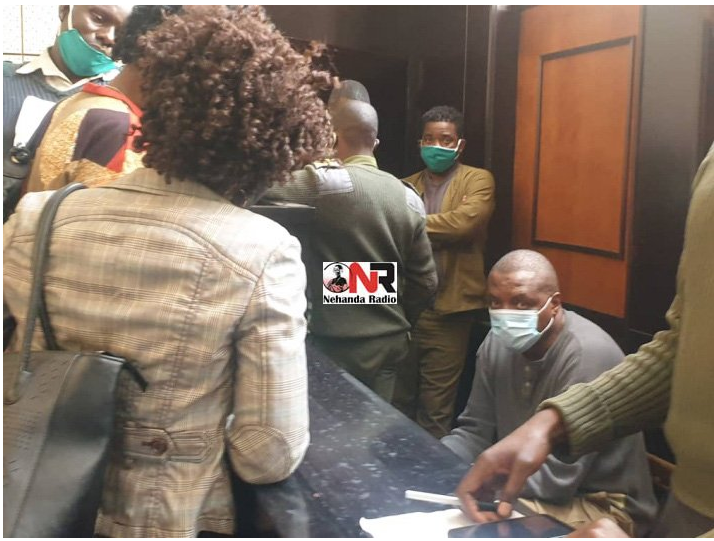
Incarcerated journalist Hopewell Chin’ono was Tuesday brought to Rotten Row Magistrates Court without the consent of his doctor who had told the Zimbabwe Prisons Security (ZPS) his client was seriously ill and showing symptoms of Covid-19.

Chin’ono appeared before Magistrate Judge Ngoni Nduna who remanded the matter to 14 September. Speaking to the press, Chin’ono’s lawyer Douglas Coltart said the state has been told to make sure that a trial date should be there by September 14 otherwise Chin’ono would apply against being put on remand for too long.

“Hopewell had been brought to Court against the advice of his doctor who spoke with the prison authorities yesterday given his condition and symptoms he was showing that it was ill advisable for him to attend court today.

“That advice was not adhered to when Hopewell was brought to court against his will,” Coltart said.

Chin’ono was arrested last month and charged for allegedly inciting violence in connection with 31st July protests. He played a key role in exposing Mnangagwa, his son Collins and his wife Auxilia in massive allegations of corruption, the US$60m Drax Covidgate scandal.

The fallout saw the arrest and dismissal of former Health Minister Obadiah Moyo. Chin’ono was also arrested along with opposition Transform Zimbabwe leader Jacob Ngarivhume and Sikhala.

They are all charged with inciting violence in connection with 31st July protests against corruption.

They are being detained at the country’s largest and most notorious jail, the Chikurubi Maximum Security Prison. 

  • Share:

Info News

Medicare Part D Plans: How Prescription Drug Coverage Works

Medicare Part D plans, prescription drug plans, Medicare drug coverage, Part D cost, Medicare prescription coverage, best Medicare Part D plan

rnrn

Medicare Part D Plans: Prescription Drug Coverage Explained

rnrn

Prescription drug costs can be one of the biggest concerns for people on Medicare.

rnrn

Medicare Part D helps pay for prescription medications. It is offered by private companies approved by Medicare.

rnrn

Medicare says Part D helps pay for brand-name and generic drugs, and it is optional coverage available to everyone with Medicare.

rnrn

Who Needs Medicare Part D?

rnrn

You may need Part D if you have Original Medicare and want prescription drug coverage.

rnrn

You may also receive drug coverage through a Medicare Advantage plan that includes Part D.

rnrn

Even if you do not take prescriptions now, Medicare says you should consider drug coverage to avoid a possible late enrollment penalty if you join later without creditable coverage.

rnrn

What Do Part D Plans Cover?

rnrn

Part D plans cover prescription medications, but each plan has its own formulary.

rnrn

A formulary is the list of covered drugs.

rnrn

Plans may organize drugs into tiers such as:

rnrn

Preferred generic
rnGeneric
rnPreferred brand
rnNon-preferred brand
rnSpecialty drugs

rnrn

The tier affects your cost.

rnrn

What to Check Before Choosing a Part D Plan

rnrn

Your Exact Medications

rnrn

List every medication, including:

rnrn

Drug name
rnDosage
rnQuantity
rnFrequency
rnPreferred pharmacy
rnGeneric or brand preference

rnrn

Small differences can change your annual cost.

rnrn

Pharmacy Network

rnrn

Some plans have preferred pharmacies where your cost may be lower.

rnrn

Check:

rnrn

Retail pharmacy pricing
rnPreferred pharmacy pricing
rnMail-order options
rnOut-of-network pharmacy rules

rnrn

Restrictions

rnrn

A plan may require:

rnrn

Prior authorization
rnStep therapy
rnQuantity limits

rnrn

These rules can affect access and cost.

rnrn

2026 Part D Out-of-Pocket Cap

rnrn

For 2026, Medicare says yearly out-of-pocket costs for Part D-covered prescription drugs are capped at $2,100. Once that cap is reached, you do not pay copayments or coinsurance for covered Part D drugs for the rest of the calendar year.

rnrn

This is important for people with expensive medications.

rnrn

Part D Late Enrollment Penalty

rnrn

If you go without Part D or other creditable prescription drug coverage for too long after becoming eligible, you may owe a late enrollment penalty.

rnrn

Medicare says the 2026 late enrollment penalty is calculated using 1% of the national base beneficiary premium, which is $38.99 in 2026, multiplied by the number of full uncovered months.

rnrn

Extra Help for Drug Costs

rnrn

Extra Help is a Medicare program for people with limited income and resources. It helps pay Part D premiums, deductibles, coinsurance, and other costs. Medicare says people receiving Extra Help also do not pay a Part D late enrollment penalty while they have Extra Help.

rnrn

Common Part D Mistakes

rnrn

Avoid:

rnrn

Choosing by premium only
rnNot checking your exact medications
rnIgnoring preferred pharmacy pricing
rnMissing enrollment deadlines
rnAssuming all plans cover all drugs
rnNot reviewing the plan each year
rnIgnoring prior authorization rules
rnFailing to apply for Extra Help if eligible

rnrn

How Often Should You Review Your Part D Plan?

rnrn

Review your Part D plan every year.

rnrn

Plans can change:

rnrn

Premiums
rnDeductibles
rnFormularies
rnDrug tiers
rnPharmacy networks
rnRestrictions
rnCopays

rnrn

Even if your plan worked last year, it may not be the best choice next year.

rnrn

Final Thoughts

rnrn

Medicare Part D can help reduce prescription drug costs, but the right plan depends on your medications and pharmacy.

rnrn

Before enrolling, compare formularies, drug tiers, pharmacy pricing, deductibles, and total annual cost.

rnrn

The best Part D plan is not always the cheapest monthly premium. It is the one that lowers your real prescription costs.

rn

Medical Malpractice Lawyer: When You May Have a Case

Medical Malpractice Lawyer: When You May Have a Case

Patients trust doctors, nurses, and hospitals to provide safe care. Unfortunately, medical mistakes can happen. A medical malpractice lawyer helps patients who were harmed by negligence, misdiagnosis, surgical errors, medication mistakes, or poor hospital care.

Not every bad medical outcome is malpractice. To have a case, there usually must be evidence that a healthcare provider failed to meet the proper standard of care and caused harm.

Common Medical Malpractice Cases

Common cases include missed diagnosis, delayed diagnosis, surgical mistakes, birth injuries, anesthesia errors, medication errors, infections, and failure to treat. A hospital negligence attorney can review medical records and determine whether negligence may have occurred.

What Compensation May Include

A medical lawsuit may seek compensation for medical bills, future care, lost income, pain and suffering, disability, and reduced quality of life.

Final Thoughts

Medical malpractice cases are complex and require strong evidence. If you believe a doctor or hospital mistake caused serious harm, speaking with a medical malpractice lawyer can help you understand your options.