Online power couple Tytie and Kiki have been embraced by many and they also have been criticized following the leaked videos of Kiki.
The couple is well known for their public display of affection and how they are always sharing all the details concerning their day to day life. Videos of Kiki’s past emerged and shocked everyone as they involved her intimacy life in the past.
The couple decided to hold a podcast session discussing this issue with Tytie defending his girlfriend citing that these things are normal and we all have a past
Some other women have praised his stance to stand with his lover despite all that has been said. One women said in quotes,’ Tytie is the real definition of a lovely husband, we all have a past and he chose to overlook it.
On the other hand another woman from Harare cited , there is no love like this , if all men knew how to love their wives this way ,the world would know peace.
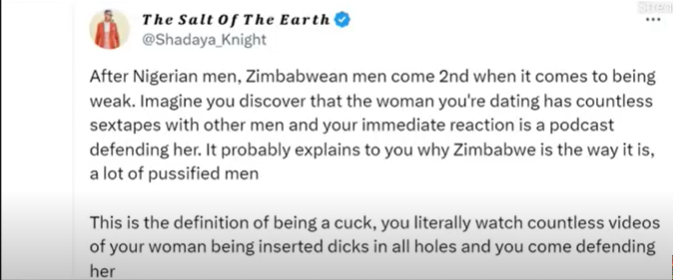
Philosopher Shadhaya had this to say:
After Nigerian men, Zimbabwean men come 2nd when it comes to being weak. Imagine you discover that the woman you’re dating has countless tapes with other men and your immediate reaction is a podcast defending her. It probably explains to you why Zimbabwe is the way it is, a lot of weak men
This is the definition of being a weak man, you literally watch countless videos of your woman being inserted things in all holes and you come defending her.
If we’re to even investigate, it wouldn’t be shocking if this mumu guy actually gets turned on watching those tapes
An embarrassment to his whole family. Then again, most probably he comes from a family of clueless as well. No strong father will ever raise a cuck. No sensible mother would ever support his son to date/marry a slut
Info News
Lawsuit Settlement Lawyer: What To Know Before Accepting Compensation
A lawsuit settlement lawyer helps clients decide whether a settlement offer is fair. Settlements can happen in personal injury, employment, class action, divorce, insurance, and business cases.
rnrn
A settlement may provide faster compensation and avoid trial risk. But accepting too little can create long-term financial problems.
rnrn
Before signing, understand what the settlement covers, whether future claims are released, how fees are deducted, and whether taxes may apply.
rnrn
In injury cases, consider future medical care, lost income, disability, and pain and suffering. In class actions, understand claim deadlines and payment rules. In divorce, understand long-term financial obligations.
rnrn
A lawyer can explain the risks and benefits of accepting or rejecting an offer.
rnrn
Settlement decisions should not be rushed. Once signed, many agreements are final.
rnrn
A fair settlement should reflect the facts, damages, evidence, and risks of the case.
rn
The Future of Artificial Intelligence and Human Employment
Artificial Intelligence (AI) is rapidly transforming industries around the world, creating both opportunities and concerns about the future of work. Businesses are increasingly using AI-powered systems to automate tasks, improve productivity, and reduce operational costs. From customer service chatbots and automated factories to self-driving vehicles and advanced medical systems, artificial intelligence is reshaping how companies operate in the modern economy.
rnrn
One of the biggest advantages of AI is efficiency. Machines can process large amounts of data much faster than humans, helping businesses make quicker and more accurate decisions. In healthcare, AI assists doctors in diagnosing diseases and analyzing medical records. In banking, machine learning systems detect fraud and improve financial security. Online retailers use AI algorithms to personalize shopping experiences and recommend products to consumers.
rnrn
Despite these benefits, many people worry that automation could replace traditional jobs. Workers in manufacturing, transportation, and administrative sectors are especially concerned about job security as companies adopt automated systems. Experts believe that while some jobs may disappear, new opportunities will emerge in fields such as software engineering, cybersecurity, robotics, and data science.
rnrn
Education and skills development will play a critical role in preparing future workers for AI-driven economies. Governments and educational institutions are being encouraged to invest in digital literacy programs, coding education, and technical training. Adaptability and lifelong learning are expected to become increasingly important as technology continues evolving rapidly.
rnrn
The future of artificial intelligence depends heavily on ethical development and responsible regulation. Issues such as data privacy, algorithm bias, and cybersecurity risks must be addressed carefully to ensure that AI benefits society while protecting human rights and economic stability.
rn


