ZANU PF has temporarily suspended the distribution of the Presidential Economic Empowerment Revolving Fund, a programme that had been overseen by presidential adviser Paul Tungwarara.
The suspension was communicated in a letter dated 23 January 2026 from the ZANU PF Commissariat Department, signed by National Political Commissar M. Machacha. The letter, addressed to provincial chairpersons in all provinces, announced the immediate halt of the fund’s distribution pending new guidelines.
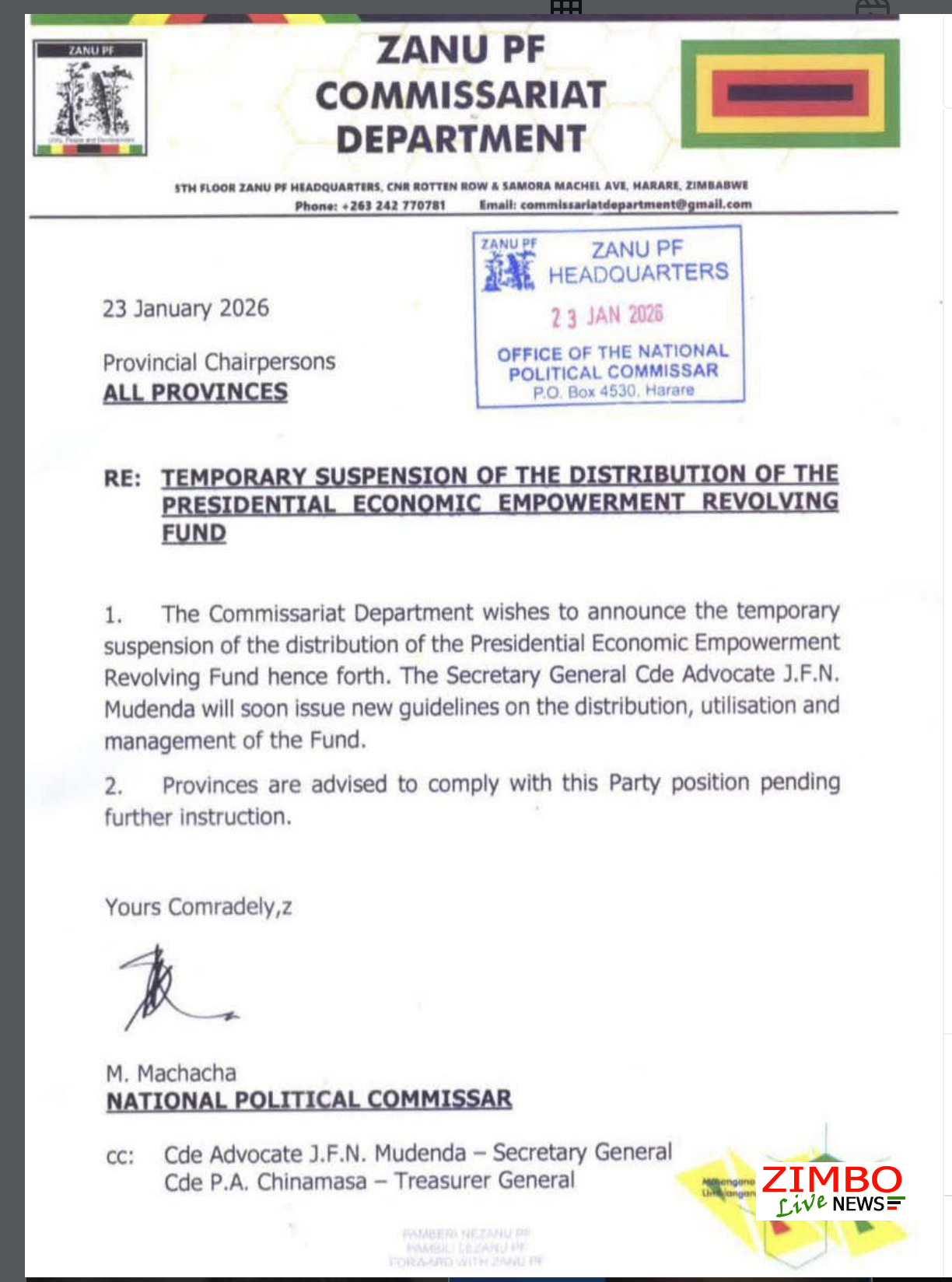
“The Commissariat Department wishes to announce the temporary suspension of the distribution of the Presidential Economic Empowerment Revolving Fund henceforth,” reads the letter. It adds that the party’s Secretary General, Advocate J.F.N. Mudenda, “will soon issue new guidelines on the distribution, utilisation and management of the Fund.”
Provincial structures were instructed to comply with the directive until further notice.
The fund has been associated with Tungwarara, who has been leading its rollout across the country.
In a separate but related development, the Office of the President and Cabinet has moved to cancel approvals granted to Tungwarara’s company for river rehabilitation works linked to alluvial mining control.
In a letter dated 22 January 2026, Deputy Chief Secretary for Coordination of National Programmes and Projects, Engineer A. Marawa, directed that all agreements signed between provinces and private companies for river rehabilitation without Cabinet approval be cancelled with immediate effect.
The letter states that Cabinet Directive and Statutory Instrument 188 of 2024 on environmental management were never reversed to allow provinces to enter into such contracts. “Therefore, all agreements signed between private companies and Provinces for purposes of river rehabilitation are null and void and should be cancelled forthwith,” the letter reads.
Provincial authorities were instructed to submit all such agreements to the Office of the Deputy Chief Secretary by 23 February 2026.
Info News
Commercial Truck Accident Lawsuit: What You Need to Know Before Filing
Filing a commercial truck accident lawsuit can be a critical step toward recovering damages after a serious crash. These lawsuits differ significantly from standard car accident claims because they often involve multiple defendants, including trucking companies, contractors, and manufacturers. Understanding the legal process is essential for building a strong case and avoiding costly mistakes.
rnrn
A truck collision attorney guides clients through every stage of litigation, from filing claims to negotiating settlements or going to trial. They ensure compliance with deadlines, gather key evidence, and develop a strategy tailored to the specifics of the case. With proper legal guidance, victims can improve their chances of obtaining fair compensation for injuries, property damage, and emotional distress.
rn
Insurance Coverage: Protecting Your Financial Future
rn - Insurance is a key part of financial planning, offering protection against unexpected events like accidents, illness, or property damage. Policies such as life insurance, health insurance, and auto insurance help individuals manage risk and avoid major financial setbacks. Choosing the right coverage can provide long-term security and peace of mind.
rn
rnrn
Understanding policy details, including premiums, deductibles, and coverage limits, is essential when selecting insurance. Comparing providers and customizing coverage ensures better protection for individual needs. A strong insurance plan acts as a financial safety net during uncertain times.
rnrn
rn


