In a show of force to discourage anti-government protests, Zimbabwe police with water cannons patrolled the capital’s streets and warned residents “you will rot in jail” if they participate in the demonstrations planned for Friday.
Six anti-government activists have been abducted and tortured this week ahead of the protests, as tensions rise over Zimbabwe’s deteriorating economic conditions, according to human rights groups.
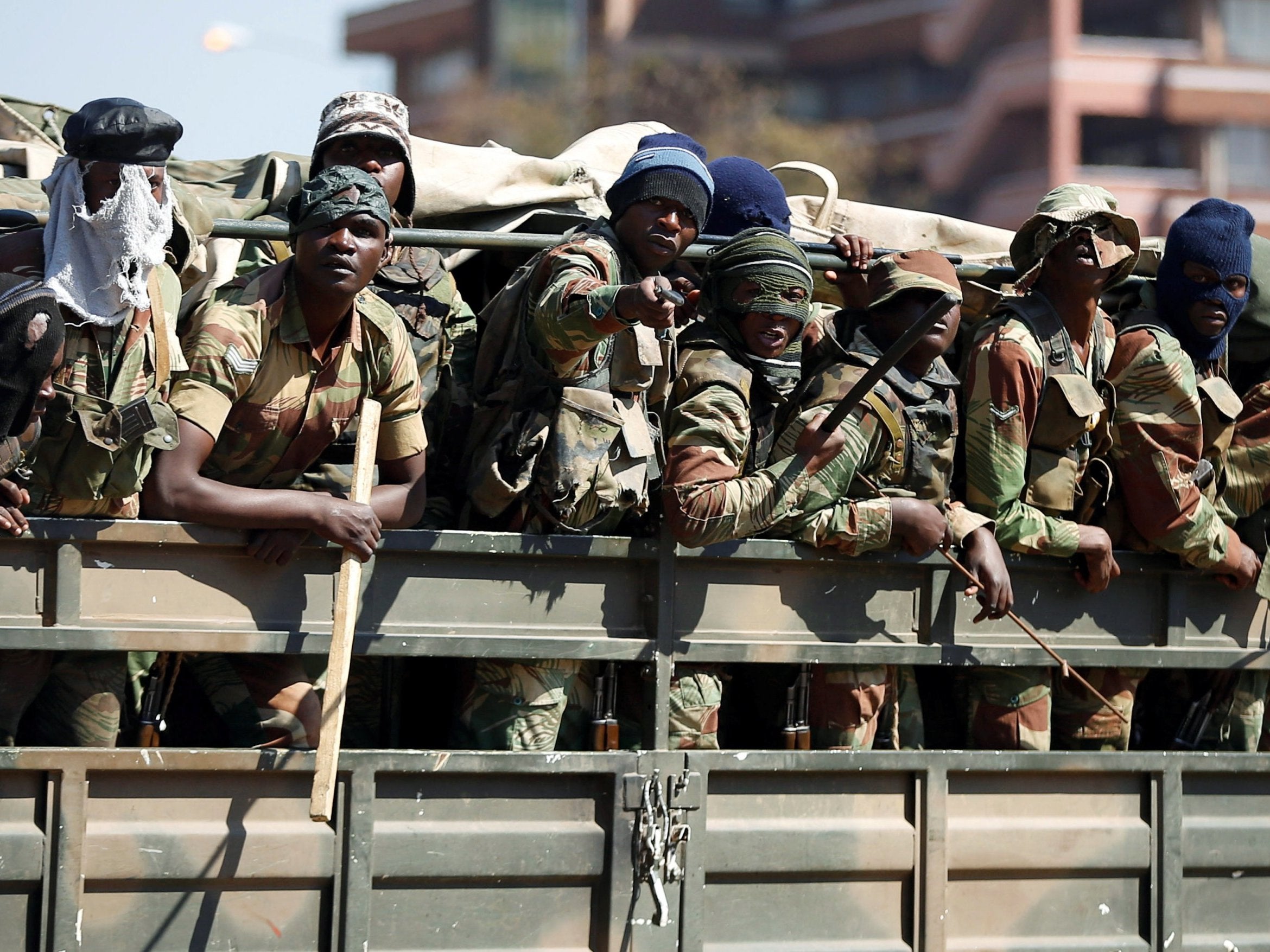
President Emmerson Mnangagwa urged the opposition to engage in dialogue, but at the same time his government is pushing for parliament to quickly adopt new security legislation criticized as repressive.
The main opposition Movement for Democratic Change party said it will roll out “peaceful” protests starting this week to try to force Mnangagwa to set up a transitional authority to address economic problems and organize credible elections. The protests will spread to other cities next week, the opposition said.
Teams of police officers searched vehicles at checkpoints on roads leading into the city. Police said the protests are likely to be violent, and warned people to stay away.
“Do not take part, you will rot in jail,” shouted police officers using megaphones in downtown Harare and some residential areas.
“Intelligence and concrete evidence on the ground has revealed that indeed these so-called peaceful demonstrations will turn out to be violent,” said police spokesman Paul Nyathi in a statement Thursday.
“Security services will not fold hands and allow violence, destruction of poverty, intimidation, threats and clandestine night acts of violent agitation to take center stage,” said Nyathi. He claimed police had recovered “a substantial quantity of granite stones and catapults (slingshots)” that were to be used in the protests.
Zimbabwe’s economic turmoil and deteriorating services are blamed for the rise in political tensions. From the hope that swept across the country following the forced resignation of repressive ruler Robert Mugabe in November 2017, Zimbabwe has returned to widespread resentment and fear, according to government critics and residents.
President Emmerson Mnangagwa, 77, came to power with promises of sweeping political and economic reforms. But now his government is widely viewed as an extension of Mugabe’s economic mismanagement and even more heavy-handed on security, according to human rights groups.
Inflation soared to a decade-high 175% before the finance minister suspended the announcement of inflation statistics last month. Power cuts are lasting 19 hours per day, debilitating water shortages are forcing people to spend nights waiting in lines at wells while about a third of Zimbabwe’s 15 million people are in dire need of food aid, according to aid agencies.
As the economy deteriorates and opposition to his rule intensifies, Mnangagwa’s government is increasingly resorting to what critics say are strong-arm tactics.
Mnangagwa’s ruling ZANU-PF party, which holds a majority in parliament, is pushing through new security legislation – the Maintenance of Peace and Order Bill – which the opposition and human rights activists describe as very harsh. Parliament met through the night to pass the controversial legislation.
“It is just a photocopy of the law that was passed in South Africa by the apartheid regime,” said opposition senator Gideon Shoko during debate of the legislation.
Ruling party members of parliament and the justice minister defended the proposed law as necessary to ensure peaceful demonstrations.
At the same time, Mnangagwa has publicly said he is open to dialogue.
“I reiterate my calls to all opposition leaders that my door remains open and my arms remain outstretched,” said Mnangagwa on Twitter Thursday. “Riots and destructive violence must be rejected; peaceful constructive dialogue are the way forward.”
But critics say his offer of talks is not genuine, pointing to what they say is increased repressive tactics.
The Zimbabwe Human Rights NGO Forum, a coalition of rights groups, church organizations, student movements and labor groups on Thursday said that six people were “abducted by suspected state security agents in the evening on 13 and 14 August and they have been severely tortured and left for dead.” Those abducted were interrogated about the plans for the protest planned for Friday, said the rights group.
The government has denied any role in the alleged abductions and torture.
The U.S embassy in Harare expressed concern over “renewed reports of abductions and assault of civil society members and opposition party members … Harassment and intimidation have no place in a democratic and pluralistic society.”
On Thursday, U.S ambassador to Zimbabwe Brian Nichols visited one of the injured activists in hospital “observed his injuries, and listened to his story,” according to an embassy tweet with a picture of the ambassador on the bedside of the activist.
Amnesty International Thursday accused Mnangagwa’s administration of “using some of the brutal tactics seen under the government of Robert Mugabe,” said Muleya Mwananyanda, Amnesty International’s deputy regional director for southern Africa.
“Instead of listening to protestors’ concerns about the economy, the authorities have used torture and abduction to crush dissent and instill fear.”
Info News
Mortgage Refinance Rates and Home Loan Savings
Mortgage Refinance Rates: When to Refinance
Homeowners often consider refinancing when mortgage refinance rates are lower than their current rate. Refinancing replaces your existing mortgage with a new loan.
A refinance may help lower monthly payments, reduce interest costs, change loan terms, or access home equity.
Types of Mortgage Refinance
A rate-and-term refinance changes the interest rate or loan length. A cash out refinance allows homeowners to borrow against home equity and receive cash at closing.
Cash out refinancing can be useful for home improvements or debt consolidation, but it increases the loan balance.
Costs to Compare
Refinancing includes closing costs such as lender fees, appraisal fees, title fees, and recording fees. Homeowners should calculate the break-even point before refinancing.
Conclusion
Mortgage refinance rates can create savings, but refinancing only makes sense when the long-term benefit is greater than the cost.
Commercial Truck Accident Lawsuit: What You Need to Know Before Filing
Filing a commercial truck accident lawsuit can be a critical step toward recovering damages after a serious crash. These lawsuits differ significantly from standard car accident claims because they often involve multiple defendants, including trucking companies, contractors, and manufacturers. Understanding the legal process is essential for building a strong case and avoiding costly mistakes.
rnrn
A truck collision attorney guides clients through every stage of litigation, from filing claims to negotiating settlements or going to trial. They ensure compliance with deadlines, gather key evidence, and develop a strategy tailored to the specifics of the case. With proper legal guidance, victims can improve their chances of obtaining fair compensation for injuries, property damage, and emotional distress.
rn


