Sex workers in Zimbabwe have cried foul over the skyrocketing prices of condoms in the country warning that this could lead to a rise in the number of infections of HIV and Sexually Transmitted Infections (STIs). The sex workers have called on the government to scrap import duty on the condoms or to subsidize them.
This comes after the price of a pack of Durex Condoms shot up to between ZWL$107 and $119. To put these prices into perspective, the government recently gazetted that the minimum wage for domestic workers is ZWL$900 per month.
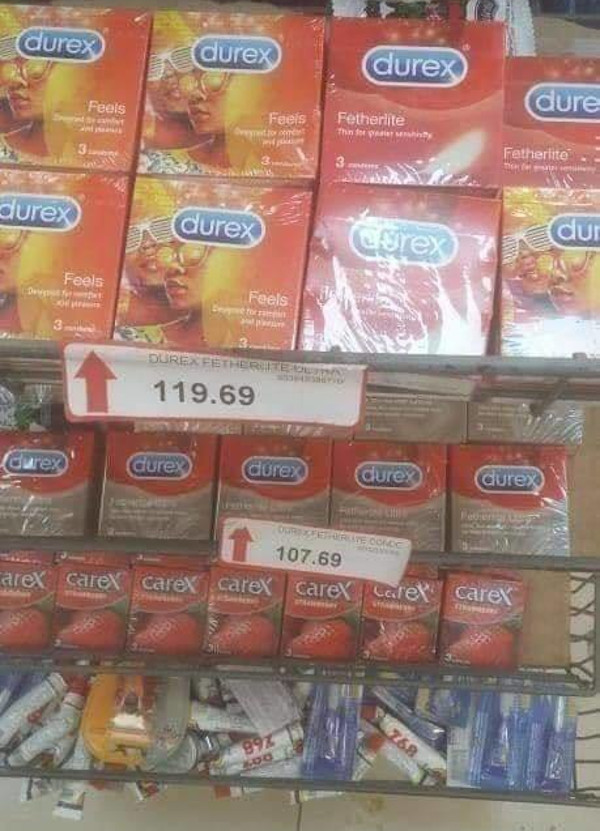
Some of the sex workers who spoke to local publication, HealthTimes, said that the new condom prices posed a risk to their profession and the health of many people. Shamy, a Chemical Engineering Student with the Harare Institute of Technology (HIT) who moonlights as a sex worker told the publication,
“The new condom price has just taken us by surprise. I am stranded and I don’t know how I am going to continue with my job as a sex worker after this. I am a sex worker, that’s my other profession, I must always have a condom in my bag since any time, anywhere, clients might want my services.
“With the new price of condoms, it is going to be difficult to survive, where are we going to get the money from. In our trade, clients don’t bring their own condoms, we have to buy to ensure we protect ourselves because they fear being caught by their wives with condoms in their pockets. Mhene inotongouya iri Savana Dry nemari yayo kasi isina condom,”
“…Increasing the price of condoms does not work. This anomaly needs to be fixed as soon as possible. If I decide to have unprotected sex with a married man today, I also put his wife at risk so we need to avert that.”
Another sex worker who identified herself as Sylvia added,
“In our line of trade, Condoms are a must and not having one could cost you a lifetime. We are shocked at this new price, we are now wondering what this whole new development means for us as sex workers.
“We want to plead with the government to reduce the price of condoms. We also want to access these condoms for free. Take for example those ma Dembare condoms, they are very hard to come by these days even in hospitals where we are supposed to be getting them, they are nowhere to be found,”
Women Against All forms of Discrimination (WAAD) Coordinator, Hazel Zemura called on the government to scrap import duty on condoms saying that condoms had played a huge role in reducing the HIV prevalence rate in the country.
“…there is need for government to provide a subsidy for condoms and cushion those companies that are importing condoms into the country. Government needs realise that this is a public health issue.”
Info News
Truck Collision Attorney: Why You Need Expert Legal Representation After a Crash
A truck collision attorney plays a critical role when victims are involved in accidents with large commercial vehicles. These cases are far more complex than standard car accidents due to federal regulations, multiple liable parties, and the severity of damages. Hiring an experienced attorney ensures that victims can navigate legal challenges while focusing on recovery. From investigating the crash to gathering evidence like driver logs and maintenance records, a skilled lawyer builds a strong case for maximum compensation.
rnrn
Victims of truck accidents often face medical bills, lost wages, and emotional distress. A qualified truck accident lawyer works aggressively to secure compensation for these damages while negotiating with insurance companies that may try to minimize payouts. With the right legal representation, clients can protect their rights and increase their chances of a favorable settlement or court outcome.
rn
Cybersecurity Best Practices
rn - Safeguarding Digital Information
rn Cybersecurity is increasingly important as individuals and businesses rely on digital systems for everyday operations. Threats such as phishing attacks, malware, and data breaches can lead to financial loss and compromised information. Understanding these risks is essential for maintaining digital safety. rn
rnrn
Implementing strong cybersecurity measures, including password management, multi-factor authentication, and regular software updates, can significantly reduce exposure to threats. Staying informed about new risks helps individuals and organizations protect their data in an evolving digital landscape.
rnrn
rn


