Sunday, August 02

After 20years Of Service Olinda Shuts Down THE OLINDA CHAPEL FOUNDATION

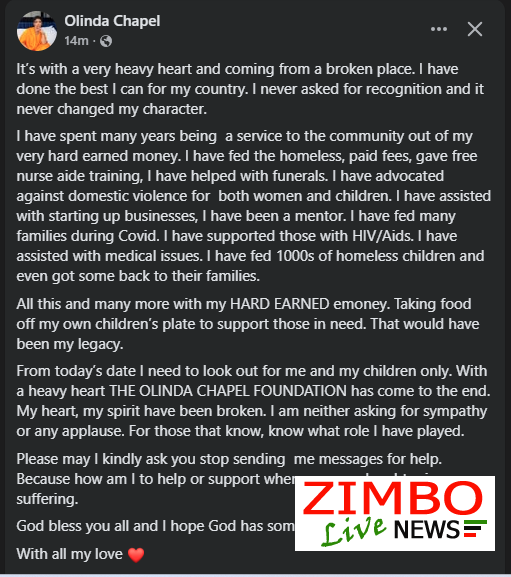
It’s with a very heavy heart and coming from a broken place. I have done the best I can for my country. I never asked for recognition and it never changed my character.

I have spent many years being a service to the community out of my very hard earned money. I have fed the homeless, paid fees, gave free nurse aide training, I have helped with funerals. I have advocated against domestic violence for both women and children. I have assisted with starting up businesses, I have been a mentor. I have fed many families during Covid. I have supported those with HIV/Aids. I have assisted with medical issues. I have fed 1000s of homeless children and even got some back to their families.

All this and many more with my HARD EARNED emoney. Taking food off my own children’s plate to support those in need. That would have been my legacy.

From today’s date I need to look out for me and my children only. With a heavy heart THE OLINDA CHAPEL FOUNDATION has come to the end. My heart, my spirit have been broken. I am neither asking for sympathy or any applause. For those that know, know what role I have played.

Please may I kindly ask you stop sending me messages for help. Because how am I to help or support when my own daughter is suffering.

God bless you all and I hope God has someone else to fill in my shoes.

With all my love ❤️

  • Share:

Info News

Best Weight Loss Programs That Actually Work: A Complete Guide to Safe, Sustainable Results

Best Weight Loss Programs That Actually Work

rnrn

Losing weight is not just about eating less for a few weeks. The real goal is building a system you can actually live with.

rnrn

That is where a good weight loss program becomes valuable. The best weight loss programs do more than hand you a meal chart. They help you understand your eating habits, improve your activity level, manage cravings, track progress, and build long-term discipline.

rnrn

A successful program should not feel like punishment. It should feel structured, realistic, and flexible enough to fit your life.

rnrn

What Makes a Weight Loss Program Effective?

rnrn

A strong weight loss program usually includes four major parts: nutrition, movement, behavior change, and accountability.

rnrn

The CDC explains that healthy weight loss includes healthy eating patterns, regular physical activity, sleep, and stress management. That means a program focused only on cutting calories may not be enough. Your body, schedule, emotions, and environment all matter.

rnrn

A good weight loss program should help you answer these questions:

rnrn

What should I eat?

rnrn

How much should I eat?

rnrn

How do I stay consistent?

rnrn

What should I do when progress slows down?

rnrn

How do I avoid gaining the weight back?

rnrn

If a plan cannot answer those questions, it may not be complete.

rnrn

Types of Weight Loss Programs

rnrn

1. Lifestyle-Based Weight Loss Programs

rnrn

Lifestyle programs focus on healthy eating, daily movement, sleep improvement, stress control, and habit building.

rnrn

These are often the best place to start because they teach long-term skills. Instead of depending on extreme dieting, you learn how to make better choices every day.

rnrn

A lifestyle program may include:

rnrn

Meal planning
rnPortion control
rnWalking or strength training goals
rnWeekly weigh-ins
rnFood tracking
rnCoaching or group support
rnSleep and stress guidance

rnrn

This type of program is ideal for people who want slow, steady, realistic progress.

rnrn

2. Medical Weight Loss Programs

rnrn

Medical weight loss programs are supervised by doctors, nurse practitioners, dietitians, or other licensed professionals.

rnrn

These programs may include lab work, body composition tracking, health screenings, prescription options, and ongoing clinical support.

rnrn

The NIH notes that treatment for overweight and obesity can include lifestyle changes, support from specialists, medicines, and other medical tools when appropriate.

rnrn

Medical weight loss may be a good option for people who:

rnrn

Have obesity-related health concerns
rnHave tried dieting many times without lasting success
rnNeed professional monitoring
rnAre considering prescription weight loss medication
rnHave conditions such as high blood pressure, insulin resistance, or sleep apnea

rnrn

A medical program should always be supervised by qualified health professionals.

rnrn

3. Online Weight Loss Programs

rnrn

Online weight loss programs are popular because they are convenient. You can track food, meet with coaches, follow workouts, and receive meal plans from home.

rnrn

A good online program should include:

rnrn

Easy meal tracking
rnProgress reports
rnCoaching access
rnEducational content
rnExercise guidance
rnSupport community
rnRealistic goals

rnrn

Online weight loss programs are especially useful for busy people who cannot attend in-person appointments.

rnrn

4. Meal Plan-Based Programs

rnrn

Some people do better when they do not have to guess what to eat. Meal plan-based programs provide menus, grocery lists, recipes, or prepared meals.

rnrn

The advantage is simplicity. You know what to buy, what to cook, and how much to eat.

rnrn

However, the best meal plans should still teach you how to make your own choices. If you only lose weight while following a strict menu, you may struggle once the plan ends.

rnrn

5. Fitness-Focused Weight Loss Programs

rnrn

Exercise matters, but it works best when combined with nutrition. The CDC says adults need at least 150 minutes of moderate-intensity aerobic activity each week, plus muscle-strengthening activity at least 2 days per week.

rnrn

A fitness-focused program may include:

rnrn

Walking plans
rnStrength training
rnCardio workouts
rnMobility training
rnGroup classes
rnPersonal training
rnProgress tracking

rnrn

The best workout is the one you can repeat consistently.

rnrn

What to Look for Before Choosing a Program

rnrn

Before paying for any weight loss program, look for these signs:

rnrn

Realistic Promises

rnrn

Be careful with programs that promise huge weight loss in a very short time. Fast results may sound exciting, but extreme methods are often hard to maintain.

rnrn

A strong program focuses on steady progress and long-term health.

rnrn

Professional Guidance

rnrn

A program does not always need to be medical, but it should be based on sound health principles. For people with medical conditions, professional supervision is important.

rnrn

Flexible Food Choices

rnrn

Avoid plans that label too many foods as “bad.” A good program helps you build balance instead of fear.

rnrn

Accountability

rnrn

Most people do better when they have support. This can come from a coach, app, group, doctor, or weekly check-in.

rnrn

Maintenance Plan

rnrn

The real test is not losing weight. It is keeping it off.

rnrn

A good program should teach you what to do after you reach your goal.

rnrn

Best Foods for a Weight Loss Program

rnrn

A healthy weight loss program usually includes foods that keep you full and support stable energy.

rnrn

Good choices include:

rnrn

Lean protein such as chicken, fish, turkey, eggs, Greek yogurt, tofu, and beans
rnHigh-fiber foods such as vegetables, fruit, oats, lentils, and whole grains
rnHealthy fats such as avocado, nuts, olive oil, and seeds
rnLow-calorie, high-volume foods such as salads, soups, berries, and steamed vegetables
rnWater and unsweetened drinks

rnrn

Protein and fiber are especially helpful because they can support fullness.

rnrn

Foods to Limit During Weight Loss

rnrn

You do not have to completely ban foods, but some foods can make weight loss harder when eaten often.

rnrn

Limit:

rnrn

Sugary drinks
rnLarge portions of fried food
rnHighly processed snacks
rnExcess desserts
rnAlcohol
rnOversized restaurant meals
rnHigh-calorie coffee drinks

rnrn

Small changes can make a big difference. Replacing soda with water or reducing late-night snacking may create progress without a complicated diet.

rnrn

Exercise and Weight Loss

rnrn

Exercise helps burn calories, but it also supports muscle, mood, mobility, and long-term weight maintenance.

rnrn

For beginners, walking is one of the easiest starting points. You do not need expensive equipment. You just need consistency.

rnrn

A simple weekly plan could look like this:

rnrn

Walk 30 minutes, 5 days per week
rnStrength train 2 days per week
rnStretch 5 to 10 minutes after workouts
rnIncrease steps gradually

rnrn

Strength training is important because muscle helps your body stay strong as you lose weight.

rnrn

Why Many Weight Loss Programs Fail

rnrn

Many programs fail because they are too strict.

rnrn

People start strong, but after a few weeks, the plan becomes exhausting. They feel hungry, isolated, bored, or frustrated. Eventually, they quit.

rnrn

Common reasons weight loss programs fail include:

rnrn

The diet is too restrictive
rnThe workouts are too intense
rnThere is no accountability
rnThe plan ignores emotional eating
rnThe program does not fit the person’s schedule
rnProgress expectations are unrealistic
rnThere is no maintenance strategy

rnrn

The best plan is not the most extreme plan. It is the plan you can keep doing.

rnrn

How Long Does Weight Loss Take?

rnrn

Healthy weight loss takes time. Some people lose quickly at first because of water weight. After that, progress may slow.

rnrn

That does not mean the program stopped working.

rnrn

Weight loss can be affected by:

rnrn

Age
rnStarting weight
rnSleep
rnStress
rnMedication
rnHormones
rnActivity level
rnCalorie intake
rnMedical conditions

rnrn

Instead of judging success only by the scale, track other wins too.

rnrn

Are your clothes fitting better?

rnrn

Do you have more energy?

rnrn

Are you walking farther?

rnrn

Are your cravings improving?

rnrn

Are you eating more mindfully?

rnrn

Those signs matter.

rnrn

Is a Paid Weight Loss Program Worth It?

rnrn

A paid program can be worth it if it gives you structure, support, and expert guidance.

rnrn

However, expensive does not always mean better. Before paying, check what is included.

rnrn

Look for:

rnrn

Meal guidance
rnCoaching access
rnProgress tracking
rnExercise support
rnEducation
rnMaintenance plan
rnClear pricing
rnSafe recommendations

rnrn

Avoid programs that push expensive supplements as the main solution.

rnrn

Final Thoughts

rnrn

The best weight loss program is not the one with the loudest advertising. It is the one that helps you build habits you can keep.

rnrn

A strong plan should help you eat better, move more, sleep better, manage stress, and stay accountable. It should also prepare you for life after weight loss.

rnrn

The goal is not just to lose pounds. The goal is to build a healthier routine that lasts.

rn

Uncontested Divorce Lawyer: How to End a Marriage Without a Long Court Fight

uncontested divorce lawyer, simple divorce attorney, affordable divorce lawyer, no contest divorce, divorce paperwork lawyer, amicable divorce lawyer

rnrn

Uncontested Divorce Lawyer: How Simple Divorce Works

rnrn

Not every divorce has to become a long courtroom battle.

rnrn

If both spouses agree on the major issues, an uncontested divorce may be possible. This can save time, reduce stress, and lower legal costs.

rnrn

An uncontested divorce lawyer can help prepare the paperwork, review the agreement, and make sure the final divorce order is clear and enforceable.

rnrn

What Is an Uncontested Divorce?

rnrn

An uncontested divorce means both spouses agree on the terms of the divorce.

rnrn

Those terms may include:

rnrn

Property division
rnDebt division
rnChild custody
rnParenting time
rnChild support
rnSpousal support
rnRetirement accounts
rnHealth insurance
rnTax issues
rnWho keeps the home
rnWho pays certain bills

rnrn

If there is disagreement on any major issue, the case may become contested.

rnrn

Do You Still Need a Lawyer for an Uncontested Divorce?

rnrn

You may not be legally required to hire a lawyer, but legal help can prevent mistakes.

rnrn

A divorce agreement can affect:

rnrn

Your home
rnYour retirement
rnYour custody rights
rnYour future support obligations
rnYour debts
rnYour taxes
rnYour ability to enforce the agreement

rnrn

A lawyer can help make sure the agreement says what you think it says.

rnrn

Benefits of an Uncontested Divorce

rnrn

Potential benefits include:

rnrn

Lower cost
rnLess conflict
rnFaster process
rnMore privacy
rnLess stress on children
rnMore control over the outcome
rnReduced court involvement

rnrn

The biggest advantage is control. Instead of leaving major decisions to a judge, spouses create their own agreement.

rnrn

When Uncontested Divorce May Work Well

rnrn

Uncontested divorce may be a good fit when:

rnrn

Both spouses are honest about finances
rnBoth spouses agree the marriage should end
rnThere is no domestic violence or intimidation
rnBoth spouses understand the property
rnCustody terms are agreed
rnSupport terms are clear
rnThere are no hidden assets
rnBoth spouses are willing to sign documents

rnrn

When Uncontested Divorce May Not Be Safe

rnrn

Uncontested divorce may not be appropriate if:

rnrn

One spouse is hiding money
rnOne spouse is pressuring the other
rnThere is abuse or fear
rnCustody is disputed
rnOne spouse controls all finances
rnA business must be valued
rnThere are major retirement assets
rnOne spouse does not understand the agreement
rnThere are complex tax issues

rnrn

A “simple divorce” can become expensive later if the agreement is unfair or unclear.

rnrn

What Documents Are Usually Needed?

rnrn

Depending on the state and case, documents may include:

rnrn

Petition for divorce
rnWaiver or acceptance of service
rnSettlement agreement
rnParenting plan
rnChild support worksheet
rnFinancial affidavit
rnDecree of divorce
rnQualified domestic relations order for retirement
rnReal estate transfer documents

rnrn

State requirements vary.

rnrn

What Should the Divorce Agreement Cover?

rnrn

A strong uncontested divorce agreement should clearly address:

rnrn

Who receives each asset
rnWho pays each debt
rnHow retirement is divided
rnWhether spousal support applies
rnChild custody schedule
rnHoliday parenting schedule
rnTransportation rules
rnMedical expenses for children
rnEducation expenses
rnTax dependency claims
rnInsurance responsibilities
rnDispute resolution process

rnrn

Vague agreements can cause future conflict.

rnrn

How Long Does an Uncontested Divorce Take?

rnrn

Timing depends on state law, local court procedures, waiting periods, and whether children are involved.

rnrn

Some states require a waiting period before a divorce can be finalized. Others move faster if all documents are complete.

rnrn

A lawyer can explain the timeline in your county.

rnrn

Final Thoughts

rnrn

An uncontested divorce can be a calmer, faster, and more affordable way to end a marriage.

rnrn

But “uncontested” does not mean “unimportant.”

rnrn

Before signing a divorce agreement, make sure your rights, finances, custody terms, and future obligations are clear.

rn